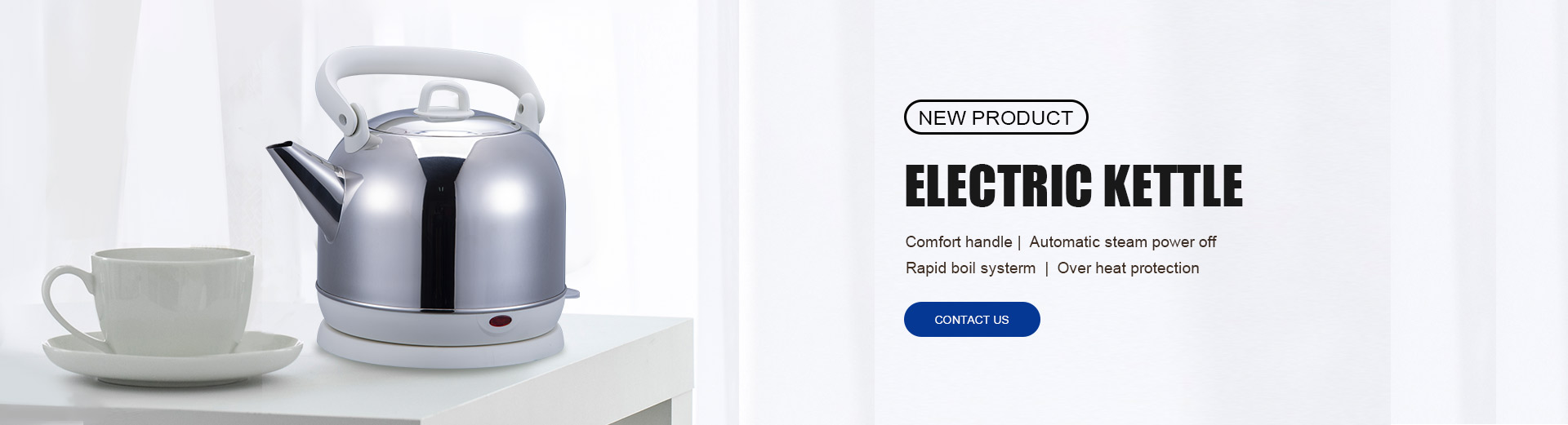
Custom kettles use surface treatment methods such as brushing, polishing, coating, plating, and laser processing to improve appearance, durability, and brand differentiation.
Surface treatment is a key process in custom kettle manufacturing because it determines the product’s appearance, texture, durability, and market positioning.
A kettle’s surface is the first part users see and touch. A well-designed surface treatment can transform a standard stainless steel body into a product with a premium appearance and stronger brand identity.
For manufacturers, surface treatment must achieve a balance between:
Visual appeal
Scratch resistance
Cleaning performance
Production consistency
Cost efficiency
In OEM and ODM kettle production, surface finishing is often customized according to product design concepts, target markets, and brand requirements.
Brushed finishing is one of the most commonly used surface treatments for stainless steel kettles. It creates a directional texture by applying controlled abrasion to the metal surface.
The main advantages include:
Modern and professional appearance
Reduced visibility of fingerprints
Better resistance against minor scratches
Easy maintenance during daily use
Brushed stainless steel is widely used for household and commercial kettles because it provides a practical balance between aesthetics and durability.
Manufacturing quality depends on controlling factors such as brushing direction, surface uniformity, and processing consistency.
Mirror polishing creates a highly smooth and reflective stainless steel surface through multiple polishing processes.
This treatment provides:
Premium visual effect
Bright reflective appearance
Smooth touch experience
High-end product positioning
Mirror-polished kettles are often developed for markets that focus on elegant kitchen appliance designs.
However, reflective surfaces require precise processing because fingerprints, water marks, and surface imperfections can become more noticeable. Professional polishing processes help maintain a consistent premium appearance.
Matte finishing creates a soft, non-reflective appearance that gives kettles a minimalist and modern style.
Advantages include:
Reduced light reflection
Comfortable visual experience
Better fingerprint control
Contemporary product appearance
Matte surfaces are suitable for brands that prefer simple and sophisticated appliance designs.
The process requires accurate surface control because uneven treatment can create visible differences between production batches.
Color customization helps brands create unique kettle designs that match different market preferences.
Common color treatment methods include:
| Surface Method | Features |
|---|---|
| Powder coating | Provides durable color surfaces and protection |
| Spray coating | Supports flexible color customization |
| Vacuum coating | Creates decorative metallic effects |
| Electrochemical coloring | Enhances stainless steel appearance |
Color finishing allows manufacturers to develop products that match specific brand identities, kitchen styles, and consumer preferences.
For OEM projects, color customization is often combined with logo processing and packaging design to create complete product differentiation.
Vacuum plating is a decorative surface technology used to create metallic effects and premium appearances.
It can produce finishes such as:
Gold tones
Metallic colors
Decorative reflective surfaces
Benefits include:
High-end appearance
Strong visual differentiation
Custom design flexibility
Vacuum plating requires precise process control because surface quality directly affects the final decorative effect.
Laser processing provides a way to add detailed designs and branding elements to kettle surfaces.
Applications include:
Brand logos
Decorative patterns
Product markings
Customized graphics
Advantages include:
High processing accuracy
Permanent markings
No additional material layers
Flexible design options
Laser technology is commonly used when brands require detailed customization without affecting the original surface characteristics.
Surface treatments influence not only appearance but also long-term product performance.
Different treatments provide different benefits:
| Treatment Type | Durability Characteristics |
|---|---|
| Brushed finish | Good scratch resistance and easy maintenance |
| Polishing | Premium appearance with careful maintenance requirements |
| Coating | Additional surface protection and color options |
| Plating | Decorative enhancement with premium visual effects |
The selected surface treatment should match the intended usage environment and product positioning.
For example, commercial kettles may prioritize easy cleaning and durability, while premium retail products may focus more on decorative appearance.
Surface treatment quality requires strict process control throughout manufacturing.
Manufacturers typically manage:
Proper cleaning and preparation ensure better finishing results.
Parameters such as polishing pressure, coating thickness, and processing time are controlled for consistency.
Finished surfaces are checked for:
Color consistency
Texture uniformity
Scratches or defects
Overall appearance quality
Surface treatments may be evaluated for:
Wear resistance
Adhesion performance
Cleaning durability
These quality controls help maintain stable results during large-scale production.
Surface treatment provides important customization opportunities for brands developing electric kettles.
Manufacturers can support:
Custom surface textures
Exclusive colors
Logo marking
Decorative patterns
Premium appearance development
Experienced OEM and ODM manufacturers combine design knowledge with production capability to create kettles that meet specific market requirements.
Surface treatment plays a major role in how customers perceive kettle quality and brand value.
The right finishing method can improve product appearance, enhance durability, and create stronger market differentiation.
Through advanced surface technologies, precise manufacturing control, and professional customization support, custom kettle manufacturers can develop products that combine attractive design with reliable performance for global markets.